Bloom
Lighting Design
2019

CCA
San Franciso, US
Lighting
Designer
Jan - May, 2019
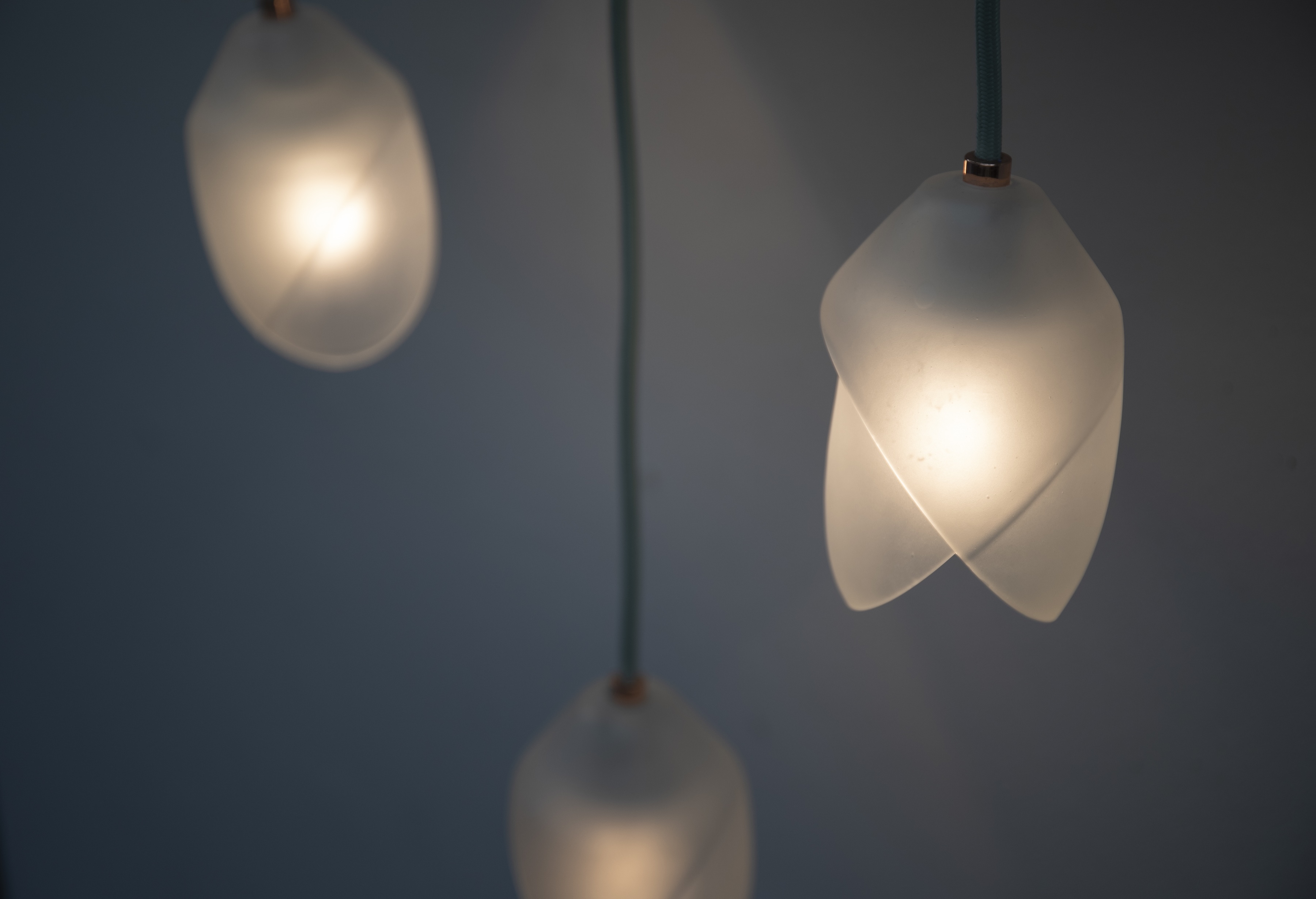
Bloom is a lighting exploration inspired by the way light filters through layers found in nature. Looking up through a tree canopy on a sunny day, I became fascinated by how overlapping leaves create an ever-changing composition of light, shadow, and transparency. Rather than recreating the leaves themselves, I wanted to capture the shifting relationship between layered translucent forms and the soft, dynamic light they produce.
To bring this idea to life, I designed and fabricated the project from concept through production, learning mold-blown glass techniques, CNC machining a custom cherry wood mold, and developing a unique fabrication process that challenged the traditional symmetry of mold-blown glass.
Sabrina Nassar
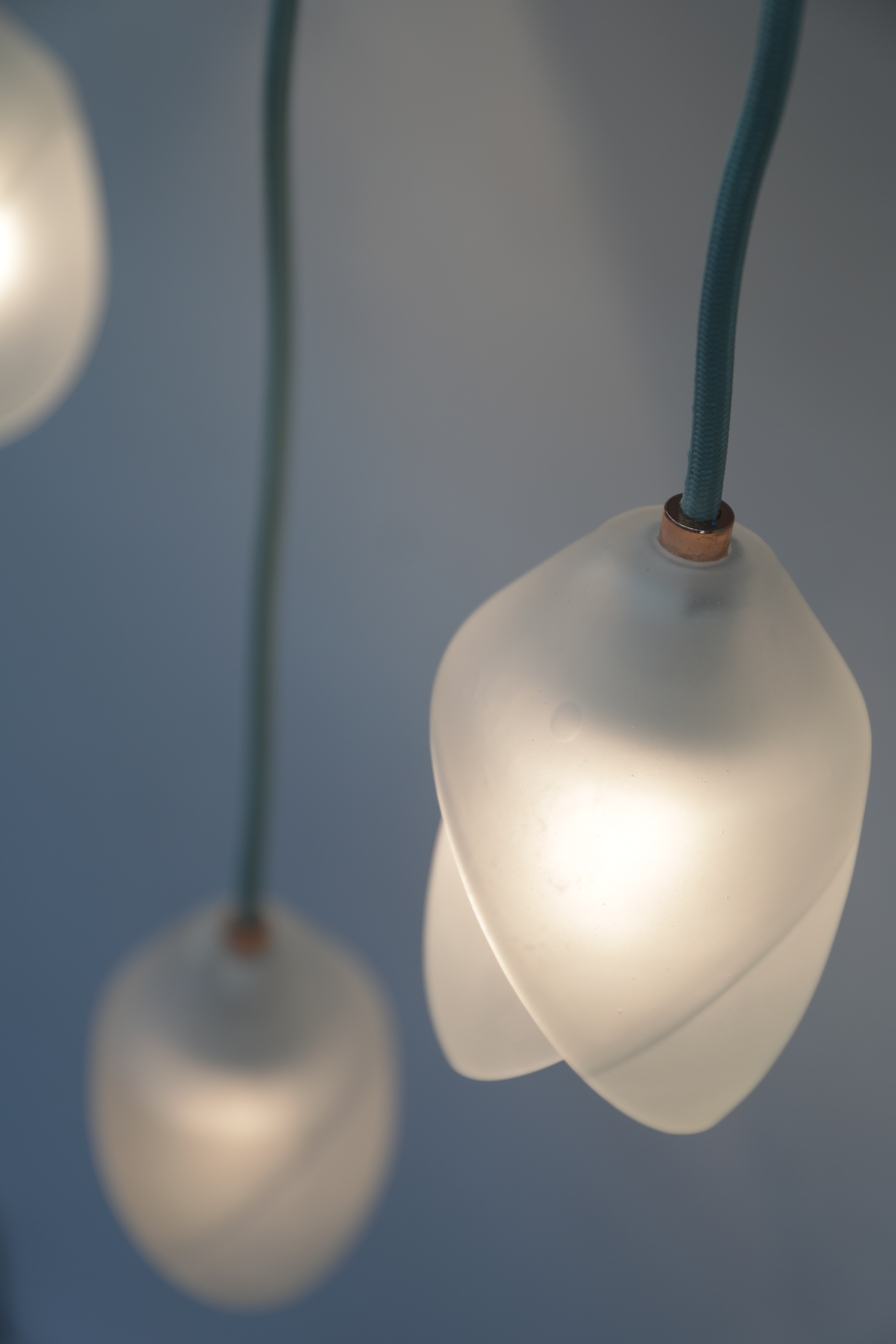
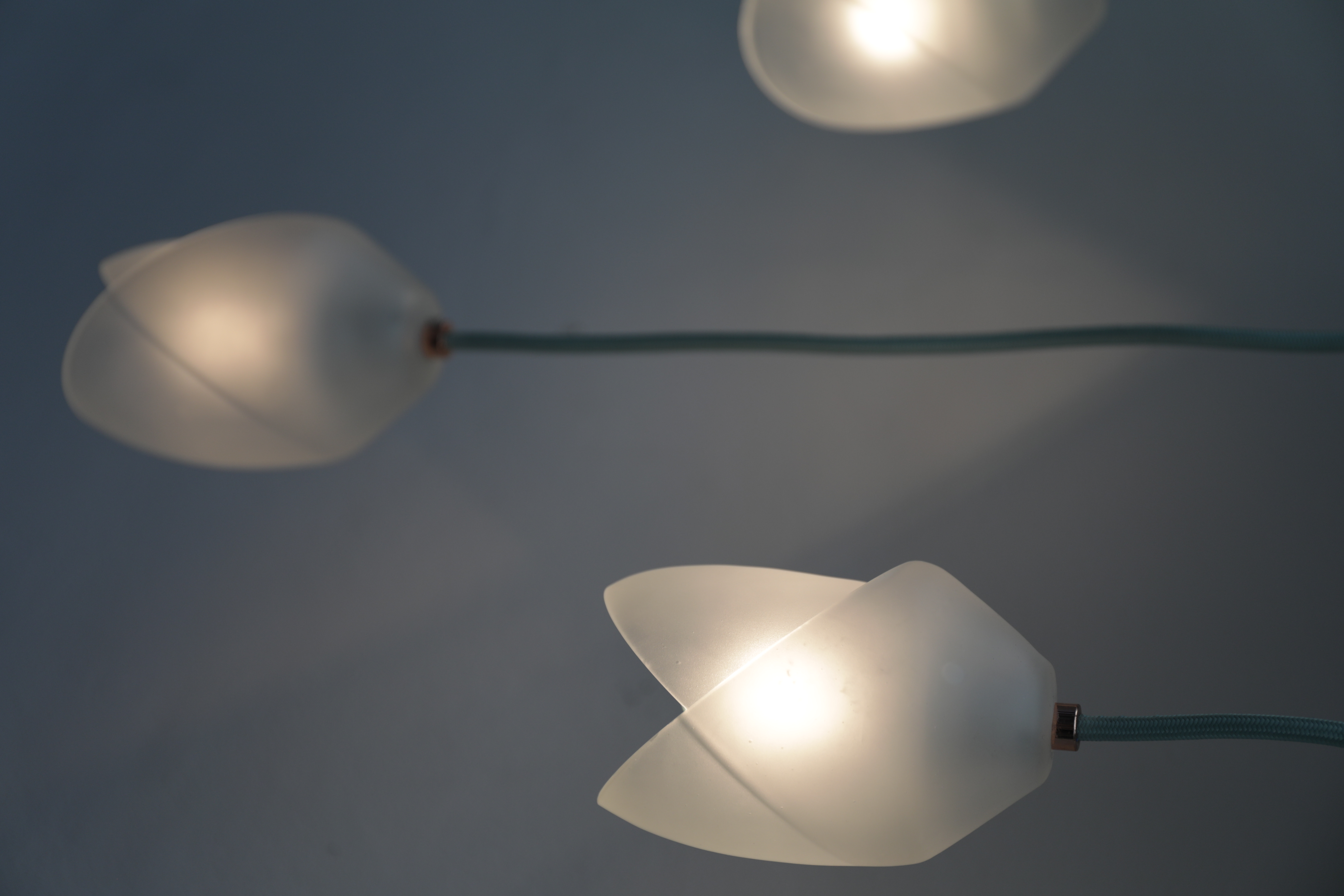

Bloom explores the relationship between light, transparency, and layering. Inspired by the experience of looking up through a tree canopy, I wanted to recreate the way overlapping leaves soften sunlight into an abstract composition of light and shadow.
As translucent layers overlap, they create subtle shifts in opacity and depth that continuously change with the viewer's perspective. Bloom translates this natural phenomenon into a lighting fixture, using intersecting glass forms to produce evolving layers of light that feel organic and alive.

Traditional mold-blown glass naturally produces symmetrical forms defined by the mold. While this provides consistency, I wanted to push beyond those constraints and introduce movement and asymmetry without losing the precision of the manufacturing process.
The challenge became finding a repeatable fabrication method that combined CNC precision with handcrafted glass while creating a more dynamic final composition.
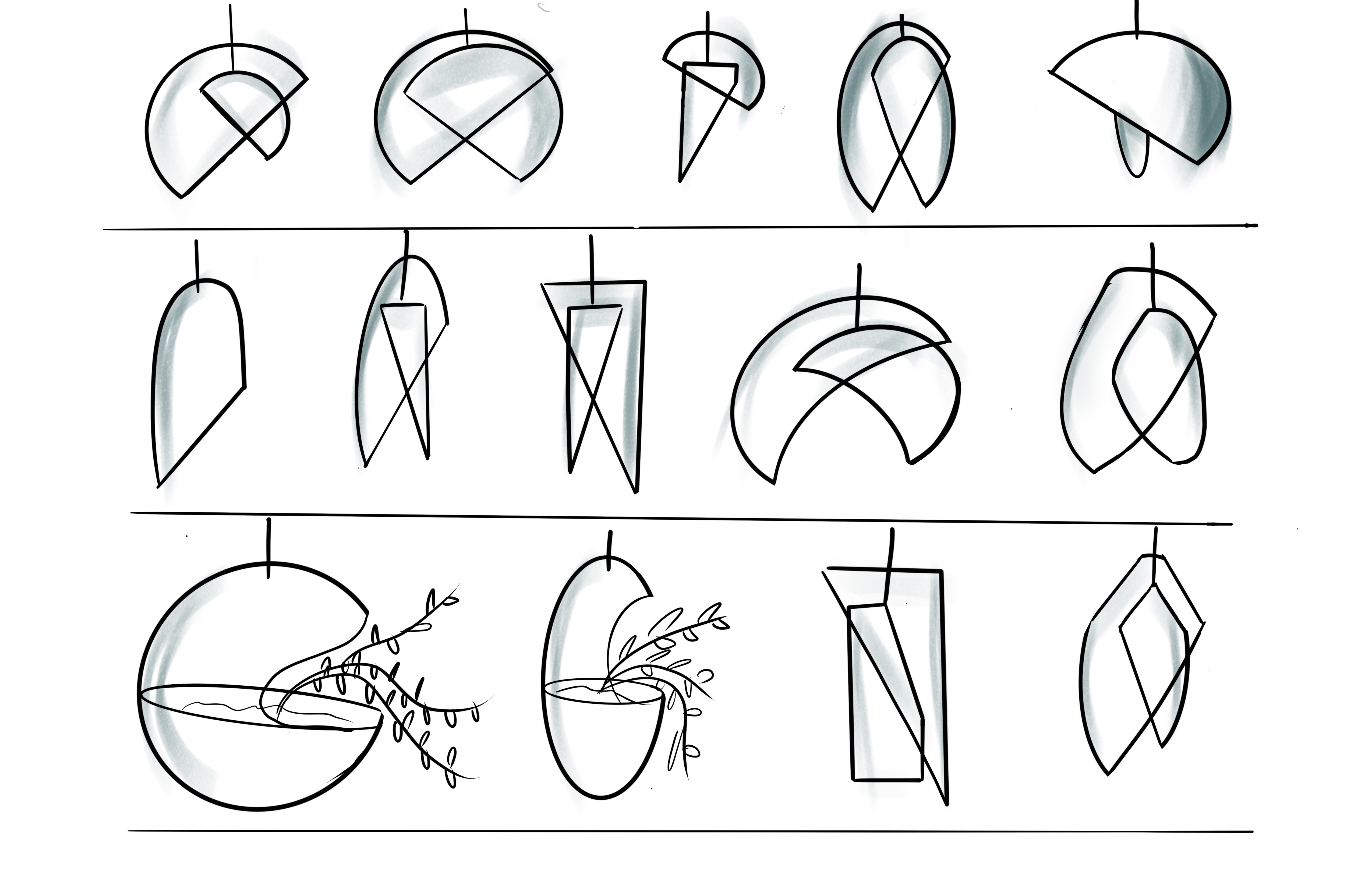
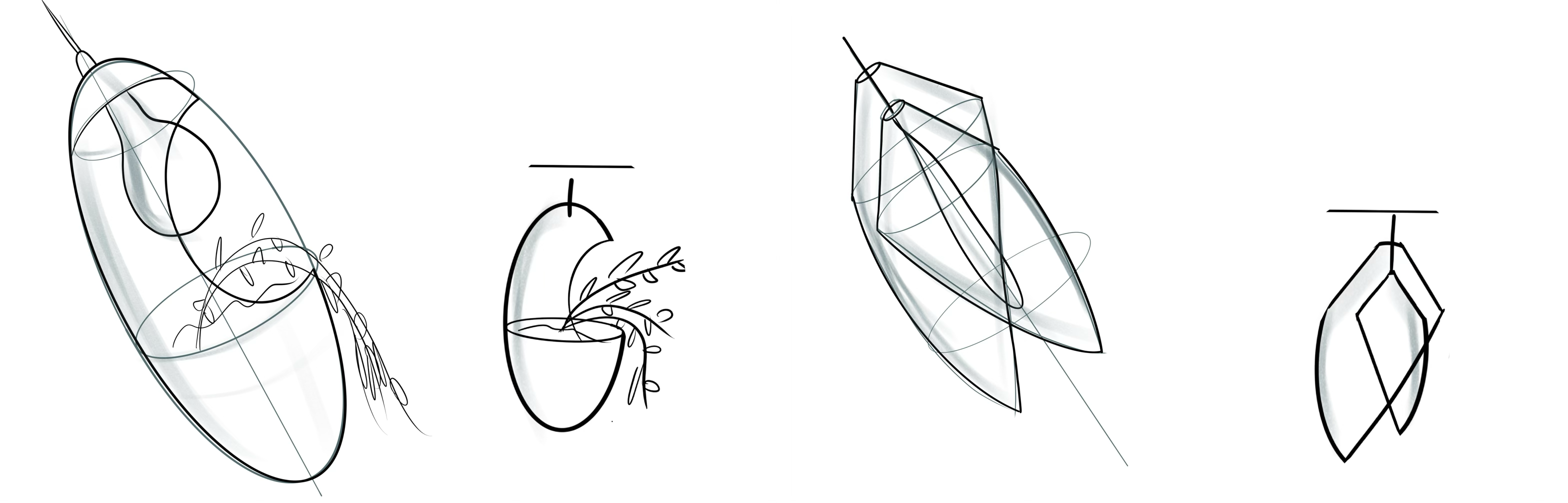
Beginning with quick sketches, I explored how simple overlapping forms could recreate the layered qualities of natural light before refining the design into a manufacturable form.
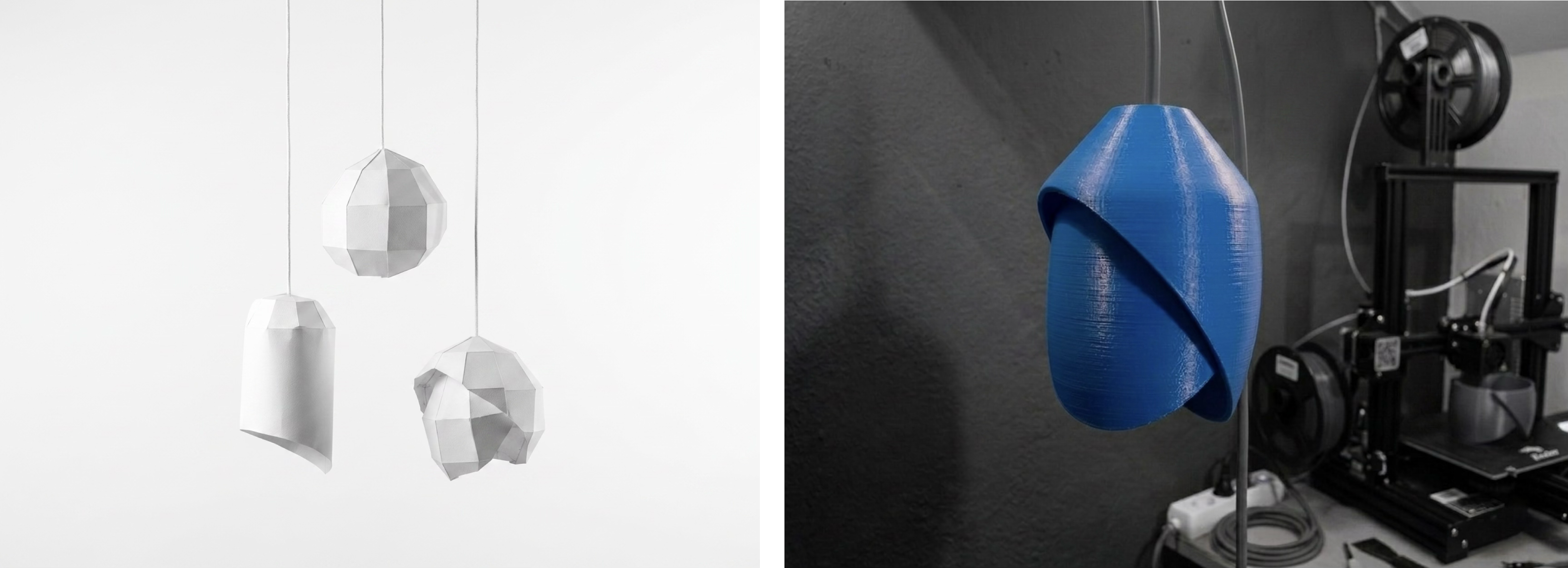
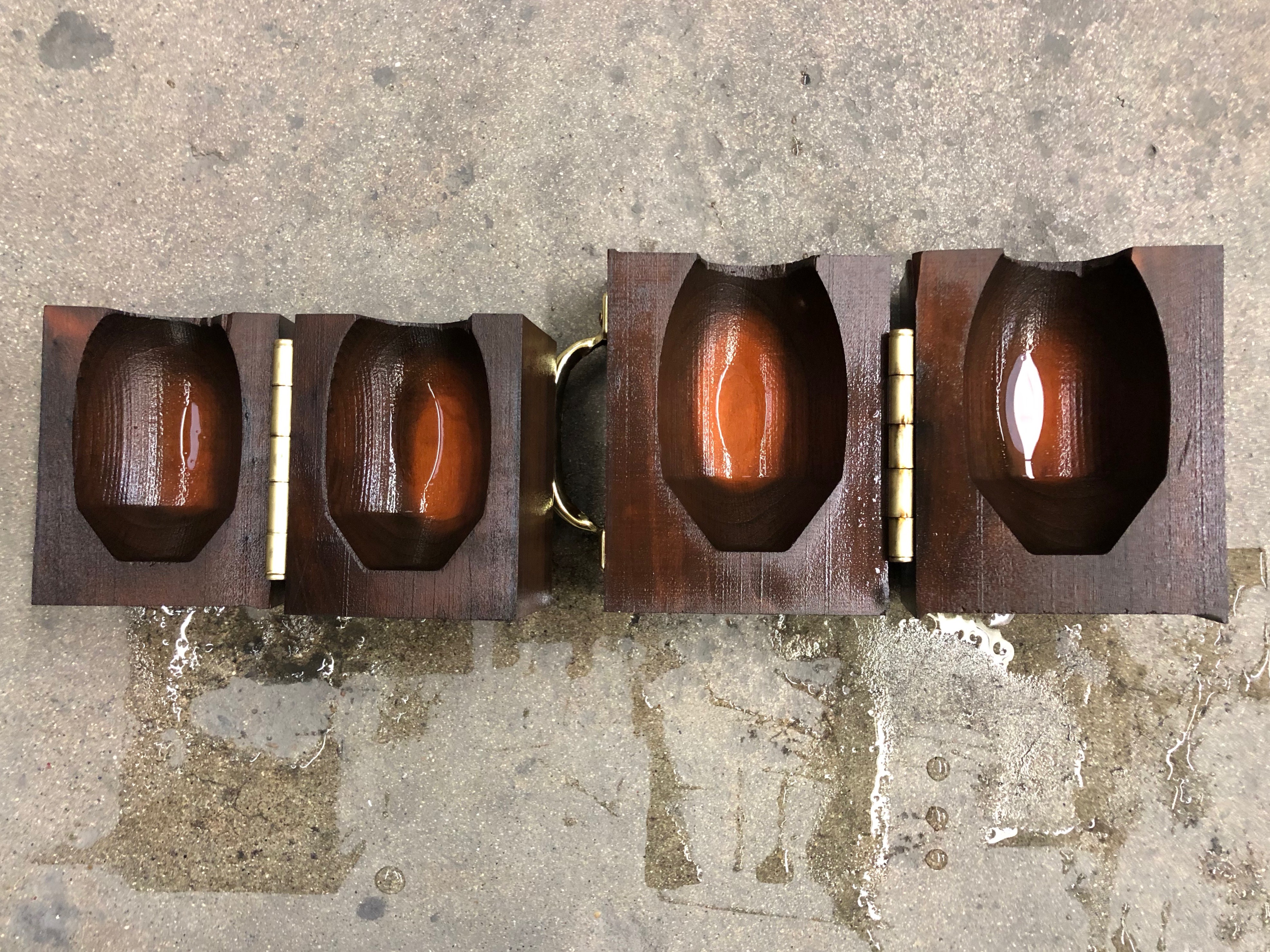
Once the concept was established, I translated the design into CAD and developed a mold that could be CNC machined from cherry wood for the glass blowing process.
.gif)
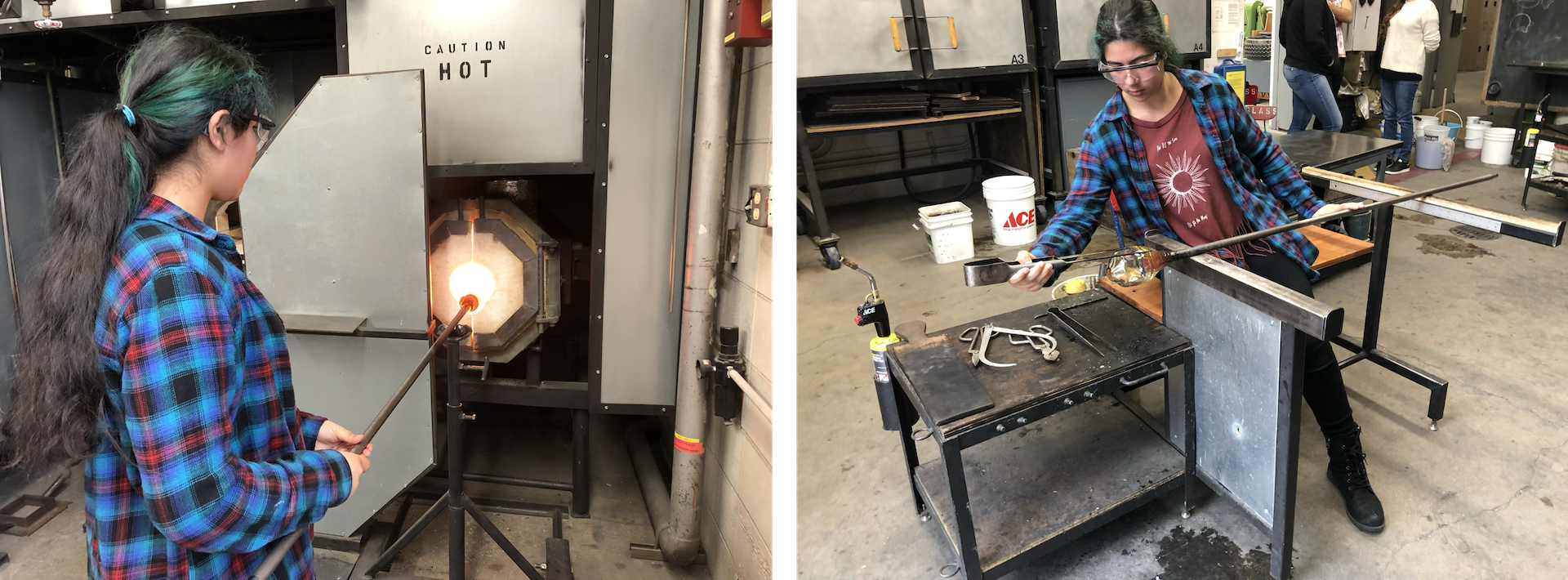
After producing the glass forms, I designed a custom foam cutting jig that allowed each piece to be cut at an angle.
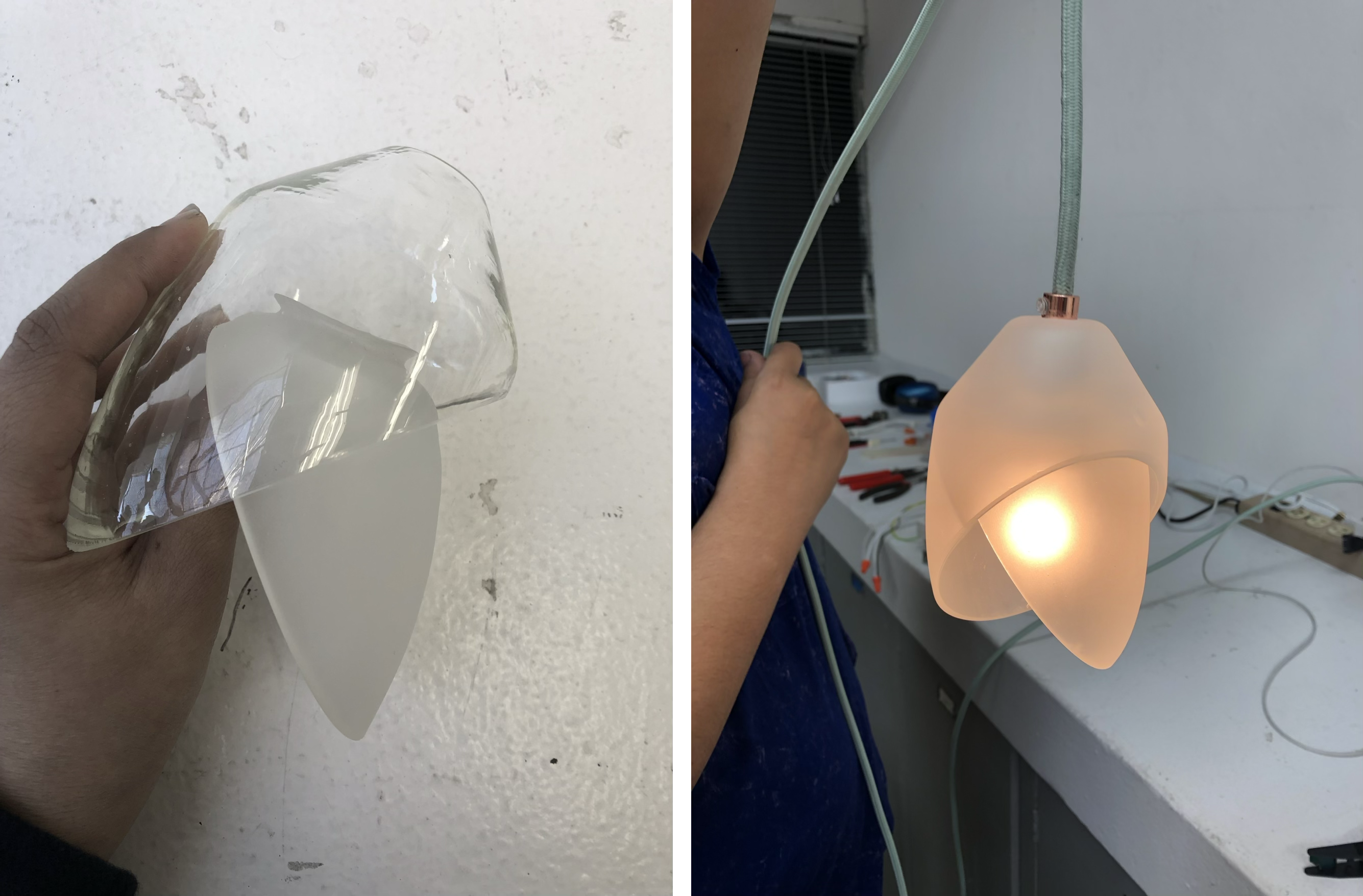
By intersecting the two glass forms, the final composition moved away from the expected symmetry of mold-blown glass while creating layered shadows inspired by nature.
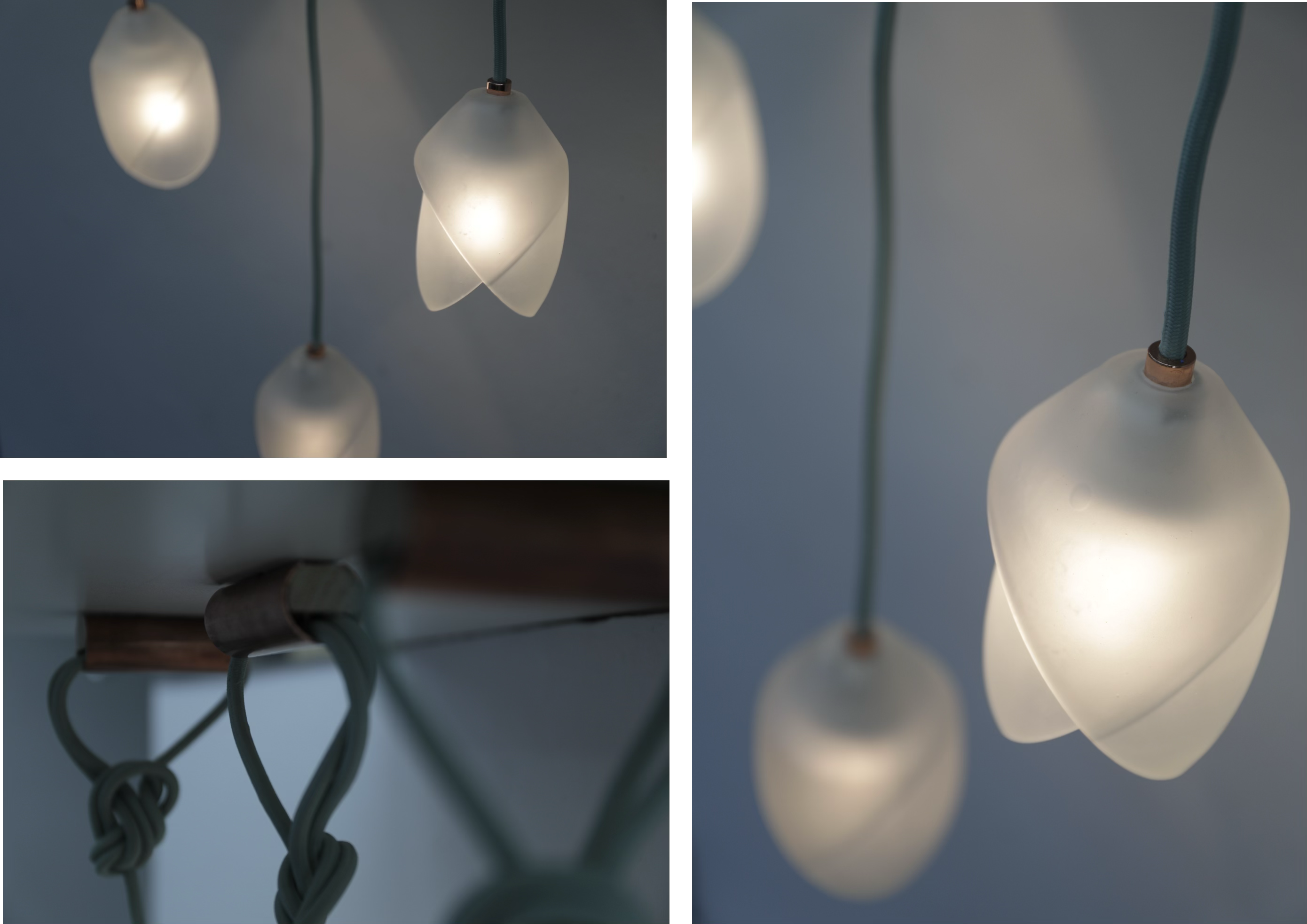


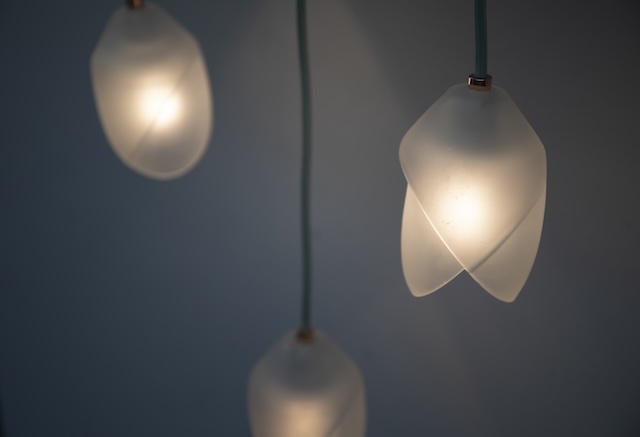
Glass lighting fixture